Introduction
A premium hydraulic seal is only as effective as how it is handled, installed, and stored. Even the highest-quality seals—whether made of Nitrile rubber, FKM (Viton), Silicone, or PTFE—can fail prematurely if subjected to improper installation techniques or poor storage environments.
To ensure maximum equipment uptime, prevent costly fluid leaks, and extend the service life of your hydraulic systems, it is critical to follow proper handling procedures. Below is the comprehensive guide to the best practices for seal installation and inventory management.
Part 1: Core Installation Best Practices
1. Protect Critical Sealing Surfaces and Lips
The entire sealing performance of O-rings, oil seals, and composite seals relies on the integrity of their sealing lips and flat surfaces. These critical contact points must remain absolutely free of scratches, burrs, or deformations.
- Handle with Care: Always use clean hands, soft gloves, or specialized soft-grip tools when handling seals. Never grab the delicate sealing lip directly with sharp fingernails or dirty hands.
- Prep the Hardware: Before installation, meticulously clean the housing, shaft, and groove. Remove any metal shavings, rust, or burrs that could slice or scratch the seal during insertion.
- The Cost of a Scratch: Even a microscopic tear on a sealing lip will destroy the fluid barrier, leading to immediate micro-leaks, pressure loss, and potential safety hazards once the system is pressurized.
2. Never Force or Hammer Seals into Place
Many packing seals, U-cups, and custom-profile seals require a precise, tight fit within their designated grooves.
- Avoid Brutal Force: It is strictly prohibited to force, squeeze, or hammer a seal into its housing. Forced installation will permanently alter the seal’s original prefabricated structure, causing it to twist, wrinkle, or tear.
- Step-by-Step Seating: Ensure the groove dimensions meet specifications. Apply a light coat of system-compatible system fluid or assembly grease (avoid corrosive lubricants) to both the seal and the groove to reduce friction. Gently and evenly press the seal into place, ensuring it sits flat without distortion.
3. Ensure Symmetrical Alignment and Post-Installation Checks
An unevenly installed seal will experience localized excessive pressure, accelerating wear and leading to early failure.
- Perfect Alignment: The seal must be seated perfectly square to the shaft or bore. Offset installations cause immediate eccentric wear.
- The Run-In Test: Installation isn’t complete once the machine is reassembled. Start the system under low-load and low-pressure conditions. Monitor the gland area for micro-leaks or abnormal friction heat.
- Follow-up Fastening: For bolted glands and packings, operating conditions like pressure spikes, thermal expansion, and vibration can cause initial loosening. Inspect and finely retorque the fasteners after the initial run-in period to prevent long-term creeping leaks.
Part 2: Seal Storage & Inventory Management
When seals are kept in inventory, proper storage conditions are the key to maximizing their shelf life and maintaining their elastomeric properties.
1. Environmental Control (Anti-Aging Protection)
Rubber, plastic, and fiber components are highly susceptible to degradation from UV light, ozone, humidity, and extreme temperatures.
- Dark and Cool: Store seals in a dark, well-ventilated warehouse, away from direct sunlight and UV radiation. Opaque, sealed packaging is highly recommended.
- Moisture Control: Maintain a relative humidity of 40% to 60%. Never store seals on damp floors or in corners prone to condensation to prevent mold and material breakdown.
- Temperature Stability: Keep inventory away from extreme heat or cold (boilers, heaters, direct AC vents, or refrigeration units). Thermal cycling causes the materials to expand and contract, rapidly accelerating the aging and hardening process.
2. Maintain a Naturally Relaxed State
A seal’s effectiveness depends on its structural “memory” and resilience.
- No Stress: Seals must be stored in a naturally relaxed state.
- Never Hang or Fold: Do not hang O-rings on nails, fold large seals, tie them with wire, or stack heavy metal parts on top of them. Permanent deformation (compression set) will occur, rendering the seal useless even before it is installed. Store them flat on clean shelves.
3. Smart Classification and FIFO Management
Improper inventory management leads to installing the wrong seal or using expired stock.
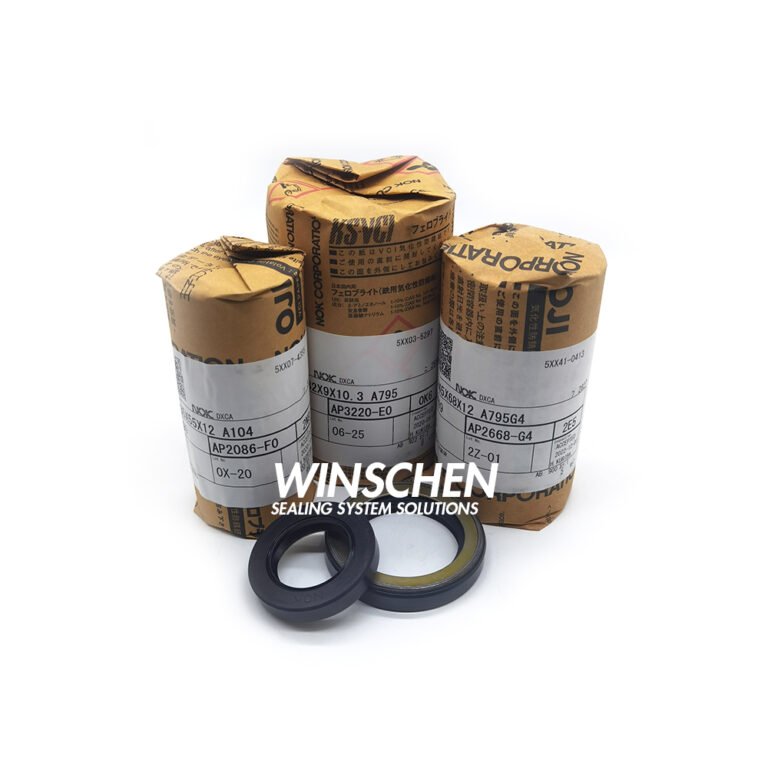
- Clear Labeling: Keep seals in their original packaging or dedicated bins. Labels must clearly state the Part Number, Material (e.g., FKM, NBR), Dimensions, Application, and the Date of Receipt.
- Separation of Materials: Never store different elastomeric materials in direct contact with one another, as plasticizer migration or chemical reactions can occur, degrading both seals.
- FIFO (First-In, First-Out): Implement a strict FIFO inventory system. Regularly audit your stock and use older inventory first to prevent seals from exceeding their natural shelf life.
Part 3: WINSCHEN Pro-Tips for Technicians
- Pre-Installation Inspection: Always visually inspect a seal right out of the package. Look for signs of shelf-aging (hardening, cracking) or transit damage. Ensure the dimensions perfectly match your equipment’s specs.
- No Sharp Tools: Keep screwdrivers and metal pliers far away from the installation process. Only use designated plastic or brass seal picks with rounded edges.
- Clean Up: After installation, wipe away excess assembly grease and external debris to prevent dirt from migrating into the hydraulic system.
Need Expert Assistance?
Ensuring you have the right seal for your heavy equipment is the first step to a leak-free operation. If you need help cross-referencing a part number, confirming dimensions, or sourcing premium aftermarket hydraulic seal kits, contact our technical support team today. We offer fast, global shipping to keep your machinery producing.