
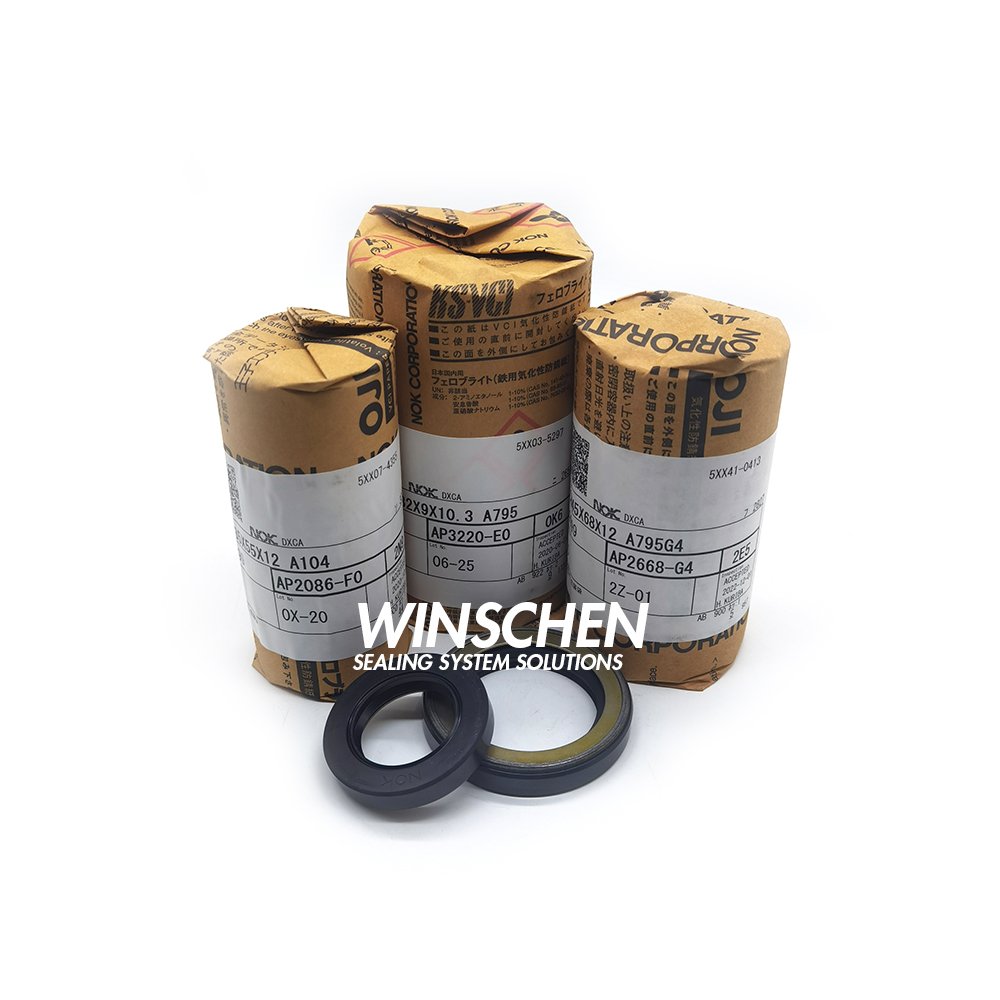
Technical Guide to Rubber Oil Seals: Selection, Materials, and Maintenance
Rubber oil seals are essential components in mechanical equipment. They create a reliable barrier between rotating shafts and stationary housings, preventing lubricant leakage while blocking dust, water, and contaminants from entering the system. This helps significantly extend the service life of bearings, gearboxes, and hydraulic components.
In heavy machinery such as excavators, loaders, agricultural equipment, and industrial systems, the performance of rubber oil seals directly affects equipment reliability and maintenance costs.
1. How Rubber Oil Seals Work
A typical rubber oil seal consists of an elastic sealing lip, a metal case, and a garter spring. The sealing lip maintains contact with the rotating shaft, forming a thin oil film that provides lubrication while preventing leaks. Double-lip designs offer additional protection against external contaminants.
2. Common Materials and Selection Guide
The performance of an oil seal largely depends on the rubber material. Here is a comparison of popular materials:
| Material | Temperature Range | Advantages | Limitations | Recommended Applications |
|---|---|---|---|---|
| NBR (Nitrile) | -30°C to +100°C | Excellent oil resistance, cost-effective, good wear resistance | Poor ozone and aging resistance | General industry, hydraulics, automotive |
| FKM / Viton | -20°C to +180°C (short term higher) | Superior chemical and heat resistance | Higher cost, slightly weaker at low temperatures | High-temperature, chemical environments, engines |
| VMQ (Silicone) | -60°C to +200°C | Wide temperature range, excellent flexibility | Lower mechanical strength | Extreme temperature static sealing |
| PTFE | -70°C to +260°C | Extremely low friction, excellent chemical resistance | Requires high shaft surface finish | High-speed, precision equipment |
3. Common Types of Rubber Oil Seals
- Single Lip Seals – Primarily prevent oil leakage in clean environments.
- Double Lip Seals – Provide extra dust protection, ideal for dusty construction sites.
- Metal Case Seals – Robust and stable during installation.
- Rubber Covered Seals – Easier to install in slightly damaged housings.
- Cassette Seals – Heavy-duty multi-lip design, commonly used in agricultural axles and large equipment.
4. Installation and Maintenance Best Practices
Proper installation can double or triple the service life of an oil seal:
- Inspect the shaft for scratches, burrs, and proper surface finish (Ra 0.2–0.8 μm recommended).
- Lubricate the sealing lip with the same oil or grease used in the equipment.
- Use proper installation tools – avoid hammering directly on the seal.
- Pay attention to the lip orientation (oil side vs. dust side).
- Regular inspection: Check for leaks, hardening, or cracks every 1,000–2,000 operating hours.
Important Note: Always verify chemical compatibility between the rubber material and the lubricant or additives to prevent swelling, softening, or premature failure.
5. Typical Applications
- Construction machinery (excavators, loaders, bulldozers)
- Agricultural and forestry equipment
- Automotive engines and transmissions
- Industrial hydraulic systems and pumps
- Mining and port heavy equipment
Why Choose Winschen?
At Winschen, we supply high-quality rubber oil seals, hydraulic seal kits, and excavator seals in various materials including NBR and FKM. We also offer custom solutions based on your equipment models.
Need professional advice on rubber oil seal selection or looking for reliable suppliers? Contact the Winschen team today for fast quotes and OEM support.